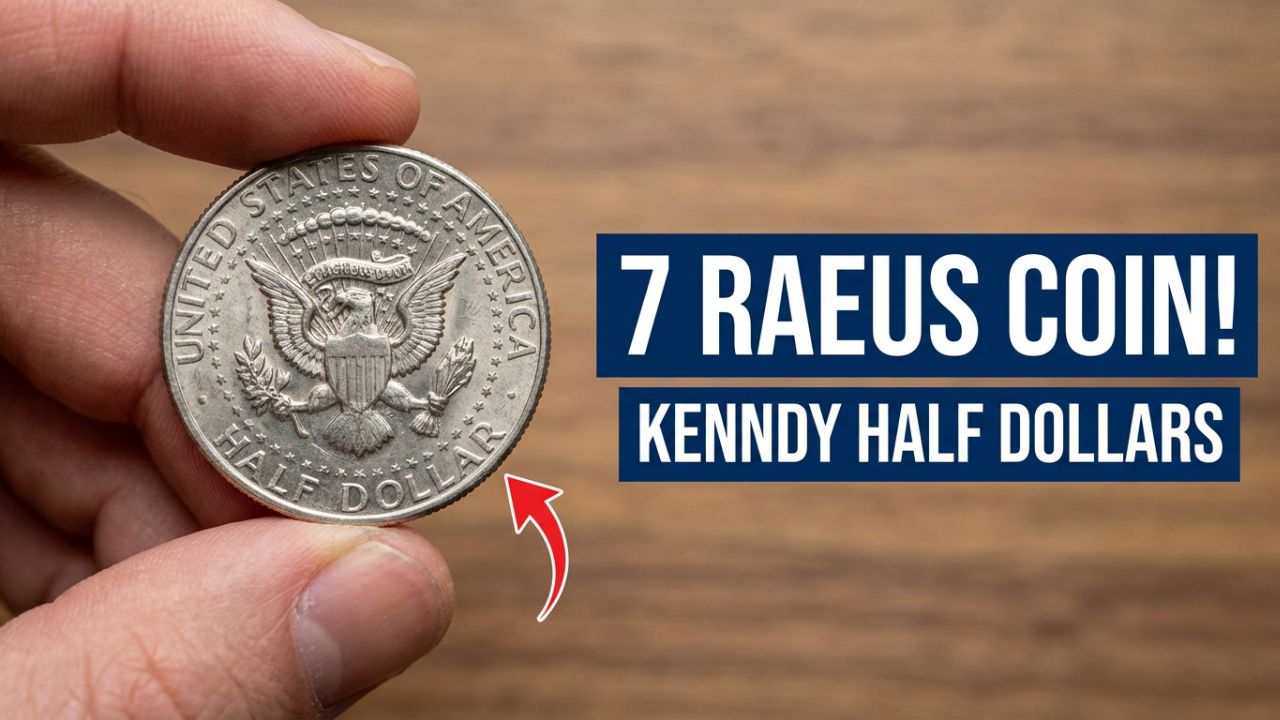
The Kennedy half dollar is one of the most emotionally resonant coins ever issued by the United States Mint. Introduced in 1964, just months after the assassination of President John F. Kennedy, the coin was embraced by the public not merely as money, but as a symbol of remembrance. Over time, the series evolved through changes in metal composition, minting practices, and collector demand. Today, rare Kennedy half dollars are valued not only for their silver content, but also for their historical context, distinctive varieties, and occasional minting anomalies that transform a common-looking coin into a true numismatic prize.
Origins and Design Significance
The Kennedy half dollar was created during a moment of national grief, which helped ensure its immediate popularity. The obverse portrait was designed by Gilroy Roberts, while the reverse Presidential Coat of Arms was sculpted by Frank Gasparro. The dignified imagery struck a chord with Americans, leading to massive hoarding of early issues. As a result, many of the earliest Kennedy half dollars never circulated, a factor that still influences availability and value today.
Although half dollars gradually disappeared from everyday commerce, the Kennedy series continued uninterrupted. This long production run makes it especially appealing to collectors, as it bridges circulating coinage, silver issues, and modern collector-focused mint products.
The Importance of Silver Composition
Silver content is a major driver of value in Kennedy half dollars. The earliest coins in the series are particularly significant:
- 1964 Kennedy half dollars were struck in 90% silver, making them highly desirable both for bullion value and collectibility.
- 1965–1970 issues transitioned to a 40% silver clad composition, still valuable but less so than their 1964 predecessors.
- Post-1970 circulation strikes were produced in copper-nickel clad, marking the end of silver halves for general circulation.
Because silver prices fluctuate, these early coins maintain a strong intrinsic value floor, even in lower grades. High-grade uncirculated and proof examples, however, often command premiums far above their melt value.
Key Rare Varieties Collectors Seek
Within the Kennedy half dollar series, certain varieties stand out as particularly rare and valuable.
One of the most famous is the 1964 Accented Hair proof, a subtle design variation where Kennedy’s hair above the ear appears more pronounced. This variety was struck early in production and later modified, making surviving examples scarce and highly collectible.
Another prized issue is the 1970-D Kennedy half dollar, which was never released for general circulation and only sold in mint sets. Its low mintage makes it a key date for collectors building a complete series.
Major mint errors also play an important role. Coins struck on the wrong planchets, dramatic off-center strikes, and doubled dies can reach four- or five-figure prices when authenticated and preserved in high condition.
Condition, Grading, and Authentication
As with all collectible coins, condition is critical. A Kennedy half dollar with sharp details, original luster, and no signs of cleaning will always outperform a damaged or heavily worn example. Professional grading by services such as the Professional Coin Grading Service or the Numismatic Guaranty Company provides authentication and a standardized grade, which greatly enhances market confidence.
Proof coins deserve special attention. These were struck using polished dies and planchets, producing mirror-like fields and frosted design elements. Proof Kennedy half dollars, especially silver proofs and cameo-quality examples, are a cornerstone of many advanced collections.
How to Build a Kennedy Half Dollar Collection
For beginners, a common approach is assembling a date-and-mint-mark set, which provides a broad overview of the series. From there, collectors often specialize in specific areas such as silver issues, proofs, or error coins.
Education is essential. Learning where mint marks are located, how to recognize cleaning or damage, and how to identify key varieties can prevent costly mistakes. Reference guides like the Official Red Book, along with reputable coin forums and local coin clubs, offer invaluable insight and community support.
Many collectors also appreciate the Kennedy half dollar for its accessibility. While rare varieties can be expensive, most dates are affordable, making the series welcoming to newcomers while still offering depth for seasoned numismatists.
A Living Piece of Modern History
The enduring appeal of the Kennedy half dollar lies in its blend of history and possibility. Each coin represents a moment in modern American memory, from the shock of 1963 to decades of evolving mint technology. The thrill of discovering an overlooked variety or a high-grade silver issue keeps collectors engaged year after year.
In a hobby often centered on the distant past, Kennedy half dollars feel personal and immediate. They remind us that history is not only ancient—it can be found in coins still within living memory. For collectors, that connection adds meaning far beyond face value.
FAQ
What is the most valuable Kennedy half dollar?
The most valuable examples are typically rare errors or varieties, such as the 1964 Accented Hair proof in top grades or major mint mistakes. These can sell for thousands, and occasionally tens of thousands, of dollars.
Are all Kennedy half dollars before 1971 made of silver?
Yes, but with different compositions. Coins dated 1964 are 90% silver, while those from 1965–1970 contain 40% silver.
Where is the mint mark located on Kennedy half dollars?
On 1964 coins, the mint mark is on the reverse near the eagle. From 1968 onward, it appears on the obverse below Kennedy’s neck.
Are modern Kennedy half dollars worth saving?
Circulated post-1971 coins are usually worth face value, but proofs, special mint set issues, and key dates like 1987 can carry premiums.