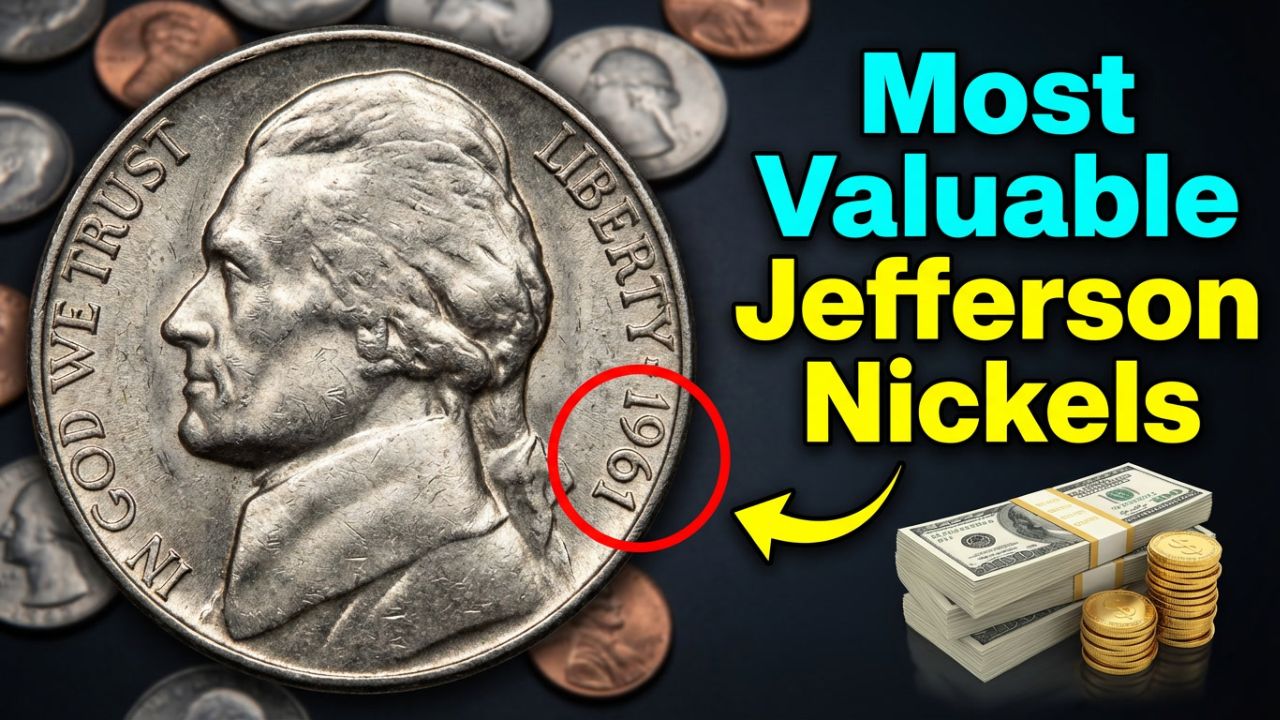
The Jefferson nickel has quietly circulated through American pockets since 1938, often overlooked because of its modest five-cent face value. Yet within this long-running coin series lies a fascinating world of rarity, craftsmanship, and history. Some Jefferson nickels have transformed from everyday change into highly coveted collectibles, commanding prices that surprise even seasoned collectors. Their value is shaped by a delicate balance of condition, minting quality, historical context, and chance survival. Exploring the most valuable Jefferson nickels offers not only insight into numismatics, but also a deeper appreciation for how small objects can carry lasting cultural and financial significance.
Why Condition Determines Value
Among all factors that influence a Jefferson nickel’s worth, condition stands above the rest. Most nickels spent years or decades in circulation, picking up wear, scratches, and softened details along the way. Coins that escaped this fate and remain in uncirculated condition are dramatically scarcer.
Professional grading services such as the Professional Coin Grading Service and the Numismatic Guaranty Company play a central role in the market. These organizations authenticate coins and assign grades based on surface preservation, strike quality, and luster. A Jefferson nickel graded Mint State (MS) shows no signs of wear, and higher MS grades can elevate a coin’s value from a few dollars to thousands. Certification also gives collectors confidence, which is essential when prices climb into premium territory.
Early Jefferson Nickels and Scarcity
The earliest years of the Jefferson nickel series are particularly challenging for collectors seeking high-grade examples. Minted during the tail end of the Great Depression and the buildup to World War II, these coins saw heavy circulation. As a result, truly pristine survivors are rare.
Nickels struck at branch mints, especially those from San Francisco bearing an “S” mint mark, often had lower production numbers. Coins like the 1939-D are relatively common in worn condition, but when found with sharp details and original luster, they become standout pieces. These early high-grade coins are valued not only for their rarity, but also for their role as tangible links to a transformative period in American history.
Wartime Silver Nickels
One of the most distinctive chapters in the Jefferson nickel story occurred during World War II. From late 1942 through 1945, nickel metal was diverted for military use. To compensate, the U.S. Mint altered the coin’s composition to include 35% silver, along with copper and manganese.
These “wartime nickels” are easy to identify by their large mint marks placed above Monticello on the reverse. While millions were produced, finding examples with strong strikes and flawless surfaces is far more difficult. In top Mint State grades, wartime silver nickels are highly prized for combining precious metal content with powerful historical symbolism tied to the American home front.
The Importance of Full Steps
For Jefferson nickel specialists, few designations matter more than “Full Steps.” This term refers to the steps at the base of Monticello on the coin’s reverse. Due to die wear and inconsistent striking pressure, most nickels show steps that are blurred or incomplete.
A Full Steps designation is awarded only when five or six distinct, unbroken steps are clearly visible. Coins that achieve this status are evidence of exceptional striking quality. When paired with already scarce dates or high Mint State grades, the Full Steps label can multiply a coin’s value many times over, making it one of the most sought-after attributes in the series.
Errors and Varieties That Add Value
Not all valuable Jefferson nickels owe their appeal to perfection. Some gain importance because something went wrong during the minting process. Dramatic errors, such as off-center strikes or doubled dies, produce visually striking coins that stand apart from normal issues.
Collectors also pursue more subtle varieties, including repunched mint marks and doubled design elements. These coins offer a behind-the-scenes glimpse into mint operations and quality control. When such errors appear on coins in high condition, their rarity and uniqueness can lead to intense collector competition and impressive prices.
Where Valuable Jefferson Nickels Are Found
Discovering a high-value Jefferson nickel today often feels like uncovering buried treasure. Most are not found in everyday change, but rather in old collections, unopened bank rolls, or family holdings that have been tucked away for decades. Estate sales and inherited coin jars sometimes reveal overlooked gems.
These stories reinforce an important lesson for collectors: careful examination matters. Even common-looking nickels can hold extraordinary value when condition, variety, or strike quality align in just the right way.
Collecting Jefferson Nickels Today
The Jefferson nickel series appeals to collectors at every level. Building a basic date-and-mintmark set is affordable and achievable, while pursuing a top-tier registry set filled with high-grade, Full Steps coins can become a lifelong challenge. This balance of accessibility and depth keeps interest in the series strong.
From its Depression-era origins to modern mintings, the Jefferson nickel reflects evolving American history. Its most valuable examples remind collectors that rarity is often the result of survival against the odds, combined with careful preservation and a bit of luck.
In the end, the most esteemed Jefferson nickels show how ordinary objects can grow into vessels of legacy and value. They pass through countless hands, often unnoticed, until one moment of recognition reveals their true worth. For collectors, the pursuit is about more than money—it is about safeguarding small but meaningful pieces of the American story.
FAQ
What is the most valuable Jefferson nickel ever sold?
Prices vary over time, but the highest values are typically achieved by rare dates or varieties in superb Mint State condition with Full Steps. Examples such as top-graded 1950-D nickels or notable doubled varieties have sold for tens of thousands of dollars.
Are all 1942–1945 Jefferson nickels silver?
Only those with the large mint mark above Monticello are wartime nickels and contain 35% silver. Early 1942 nickels without the large mint mark are standard copper-nickel issues.
Can I identify Full Steps without professional help?
A magnifying glass or loupe can help you check for clear, separated steps, but official recognition and maximum value require certification from a professional grading service.
Are modern Jefferson nickels ever valuable?
Most modern issues are worth face value, but certain error coins, proof issues, or perfect Mint State examples can carry premiums.